 KOOROW
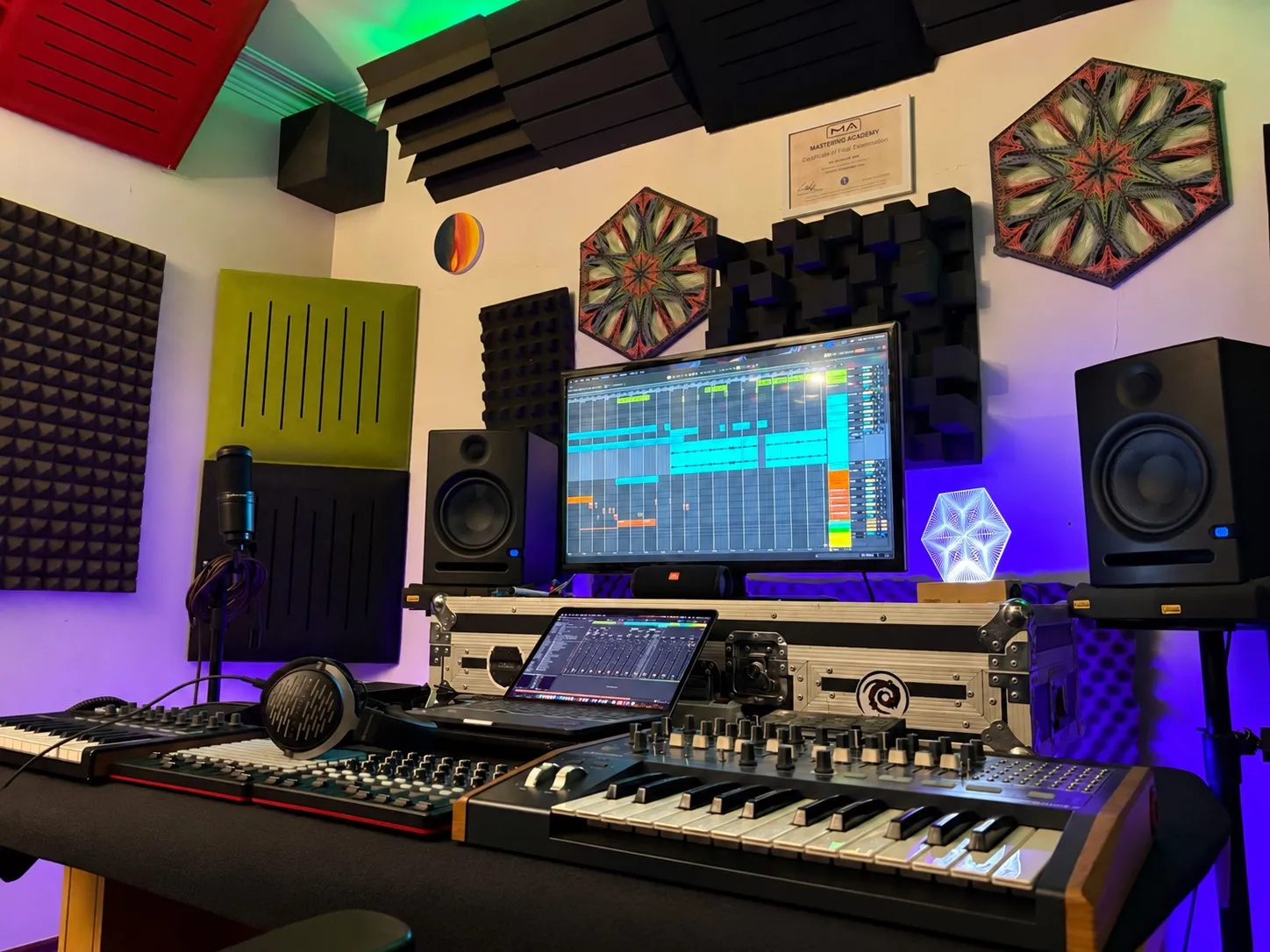
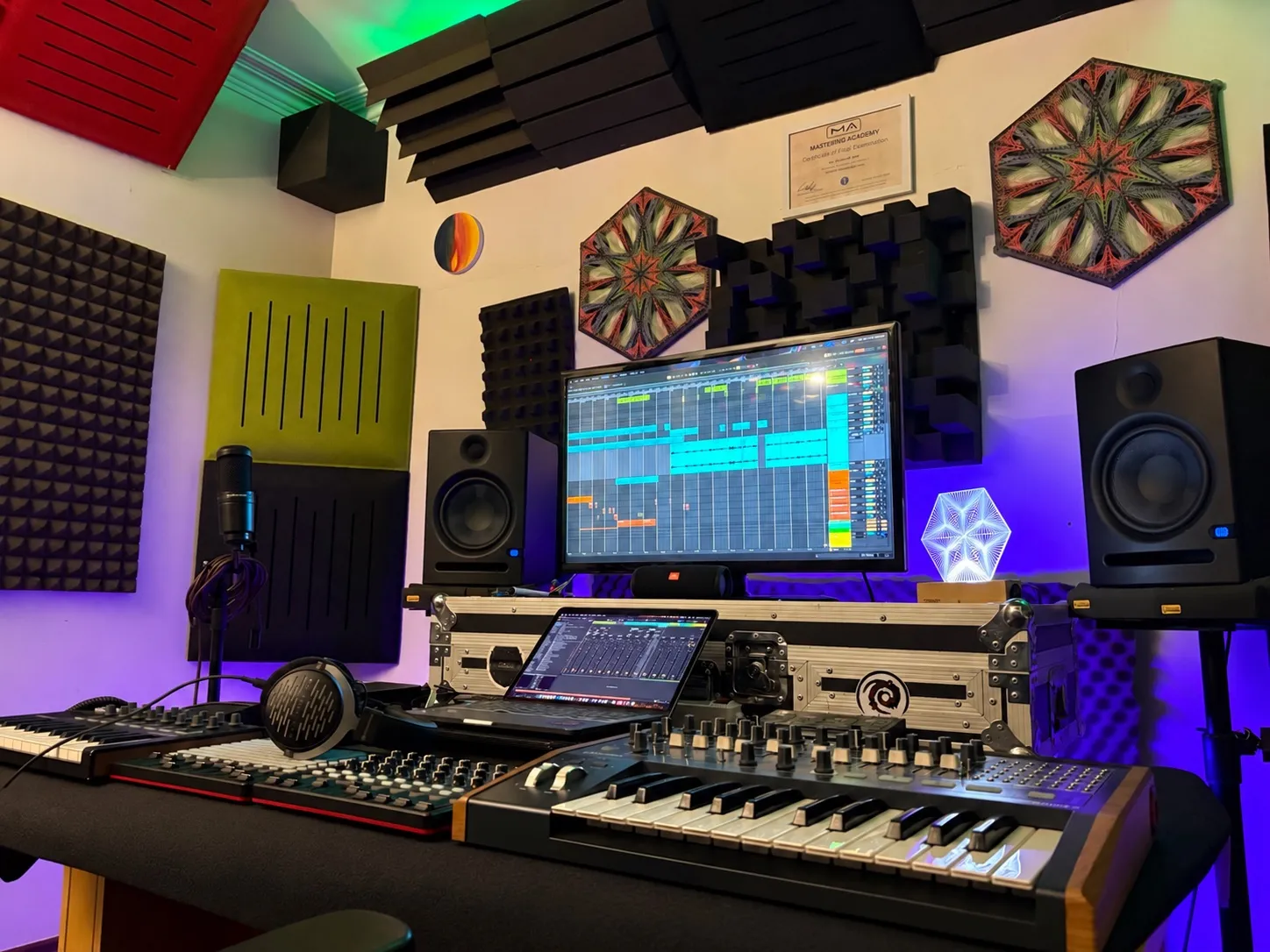
Dark, moving atmospheres are a big part of what makes darkpsy and forest feel deep and scary: a sound that slowly comes and goes, screams a little and keeps changing its texture. In this lesson KOOROW designs a dark detuned atmos pad in Serum 2 with only a few simple steps, as a partner for the FM lead from his previous video.
The video is in Persian. This article walks through every step in English.
The recipe
- Slow envelope so the sound swells in and fades out.
- Movement from a slow, free-running LFO on the wavetable position.
- Grit from Sync warp, driven by a second envelope.
- Space from a clean reverb.
Atmos, pad or texture?
Atmospheres, pads and textures are almost the same thing. What separates them is the job they do in a track. Psytrance mostly uses textures. The kind of atmos built here, a sound that comes and goes with a strange screaming character, is much more common in darkpsy and forest. KOOROW covers textures in a separate video.
Step 1: A long, slow envelope
A sound like this needs a long character, so it starts with a slow attack. Serum 2 added a very useful option: envelope times can be set in BPM instead of milliseconds. If your note lasts two bars, you can simply say “rise for one bar, release for one bar” instead of converting milliseconds by hand.
| Envelope 1 | Setting in the video |
|---|---|
| Attack | Started at 1/2, raised to 1 because the sound came up too quickly |
| Decay | 1/2 |
| Sustain | -6 dB |
| Release | 1/4 at first. It felt too short for the tail, so increase it to taste |
Step 2: Give it movement
Atmospheres come in slowly and leave slowly, so they stay in the track for a long time. If the sound does not change during that time, it gets boring. That is why you try everything to give it movement. KOOROW keeps this video simple and shows a few easy methods, with more advanced atmos videos to come.
- Choose an unusual wavetable for the oscillator. Moving the WT position changes the character of the sound over time. Pick a table where the change is smooth. Some tables jump suddenly from one shape to the next.
- Assign an LFO to the WT position. Keep the rate slow. All rates in an atmosphere should be slow.
- Set the LFO to Free instead of retrigger. Otherwise every note restarts the movement from the same point. In Free mode each note lands somewhere different in the wavetable.
Step 3: Add grit with Sync
- Set the oscillator’s warp mode to Sync.
- Assign Envelope 2 to the sync amount. KOOROW tries it inverted and normal. Both work, and the sync adds a rough, gritty edge, exactly what he was after.
- Send the same envelope to the filter cutoff as well, after switching the filter on. Do not close it so far that the sound dies.
- Raise Envelope 2’s release. Without it, the moment you let go of a note the sync snaps back to where it was, and you hear a sudden change.
If you want to go further, switch on more oscillators, for example a second one an octave up or down playing in parallel with the first. That is for a later video.
Step 4: Add reverb
You can use Serum’s own reverb, Ableton’s Reverb or a Valhalla. KOOROW’s favourite is Valhalla VintageVerb, which sounds clean even at its default settings. You can start from its presets or build your own. In the video he picks an ambience-style setting with about five seconds of decay, keeps the mix somewhere in the 80s percent, and adjusts the size.
Step 5: Harmonic or detuned?
As built so far, this is a harmonic pad: the notes you play form a real harmony. KOOROW then detunes it. Once detuned, it is no longer harmonic, so you can really only use it in darker styles like forest and darkpsy. If you keep it harmonic instead, you can give it rhythm with a gate, using a plugin like ShaperBox, and use it as a texture in psytrance too. KOOROW loves these detuned sounds. They are in all of his tracks.
Step 6: Record it over the lead
KOOROW plays the atmosphere by hand over the FM lead from the previous video, at a slightly lower volume, then quantizes the clip. You can write the notes instead if you prefer. Notes outside the scale do not matter here, because the pad is detuned. If it were harmonic, they would.
Where to go next
This sound is not mixed yet: no EQ, no compression. Keeping it simple is the point. Someone who does not know how it was made might think it is very complex, but it took only a few steps. From here, try:
- a phaser, flanger or doubler for stranger movement,
- oscillator B as an extra layer,
- the granular oscillator, which is great for FX, and the spectral oscillator, which is great for pads and atmospheres,
- a second filter and more modulation routing.
Step by step, these make the sound more complex without hurting its quality.
Get presets and feedback on your sounds
Koorow Premium brings weekly sound design lessons, Serum presets, samples and feedback on your own tracks. Private Serum and Ableton Live lessons are also available in English.