 KOOROW
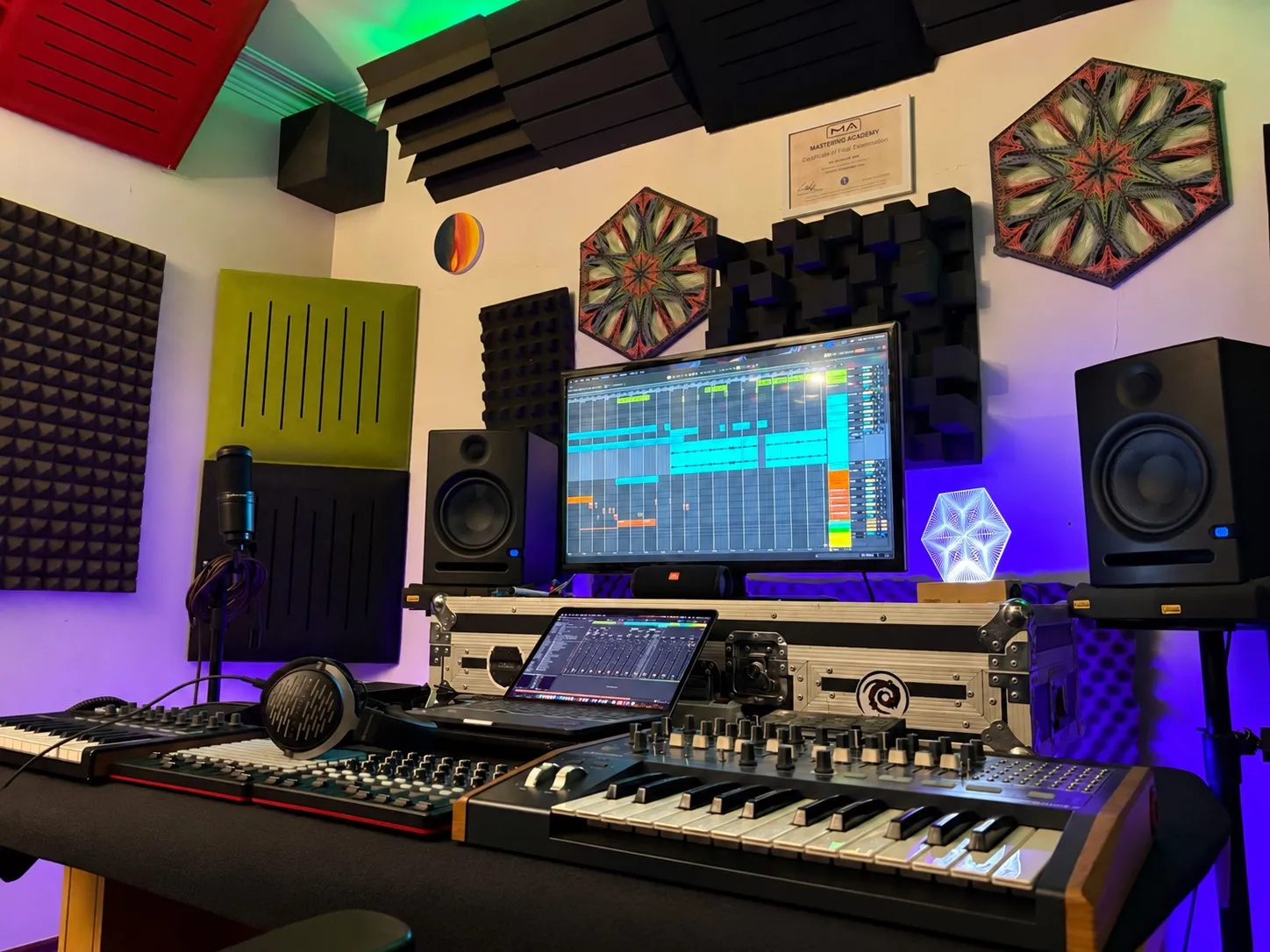
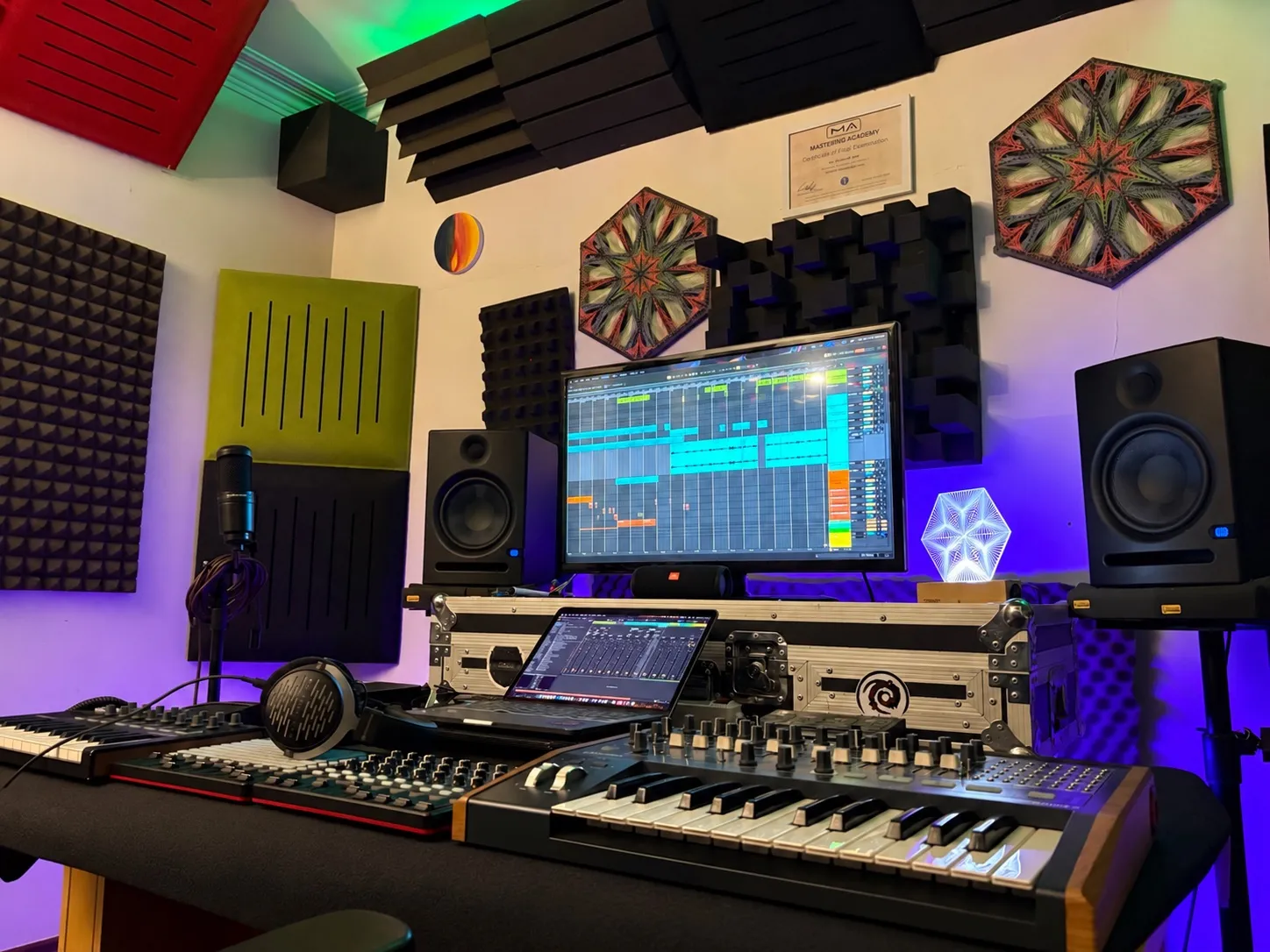
In this class session from KOOROW’s comprehensive music production course, a student brought his Korg ARP Odyssey to the studio. KOOROW connected his own synth, and together they did live sound design and a short jam. Afterwards KOOROW breaks down each sound: the oscillators, the filter, the envelopes and the modulation. The point is that you can build the same sounds on any synth.
The video is in Persian. This article walks through every step in English.
Sound design is not tied to one synth
Different synths have different colours, different layouts and many other differences. But sound design is one thing. Once you understand how a sound is built, you can recreate it on whatever synth is in front of you. That is why KOOROW explains every patch instead of just playing it.
The jam
In the live session the roles were split. The atmosphere and the overall space came from KOOROW’s synth. The pluck lead, which turned into FX in places, and most of the live playing came from the student’s ARP Odyssey.
Sound 1: The Odyssey pluck
Gating the volume with the envelope
The ADSR envelope is routed, through an amount fader, to the VCA, the voltage-controlled amplifier, which is simply the synth’s volume. The envelope gates the sound on and off in a pattern. It is triggered every time a MIDI note arrives, because the synth’s MIDI input is connected and every incoming note restarts the envelope.
The cutoff is closed because of the envelope’s shape: a slow attack, a long decay from the peak down to a fairly high sustain, and no release. Add more release and the sound would get a tail.
Sample & hold on the filter
A sample & hold is also working on the filter. Sample & hold is a random LFO: at every step it generates a random value. You can see its LED blinking, and its rate is adjustable. Slow it down and you can watch the filter jump to a new random position each time.
Oscillators and FM
- Two oscillator volumes: one all the way up, one at half. Noise was raised at the end.
- One oscillator is a saw, the other a square.
- The two VCOs modulate each other: FM. When software says VCO, it means the oscillator.
A quirk of the Odyssey: instead of putting the waveform control in each oscillator section, it sits in the mixer.
The S&H mixer
The sample-and-hold mixer decides whether the S&H acts on the oscillators’ frequency modulation. Open, their frequencies follow the S&H up and down. Closed, it does nothing. Close it, raise the LFO amount instead, and the LFO itself FMs the oscillator. Its shape can be sine, square or another wave, and its rate is set there too. The result can be an FX or an FM lead, and sounds like this are very common in hitech.
Sound 2: KOOROW’s pad
On the other synth there was a heavy reverb. He switches it off to let you hear the raw sound.
- You hear a saw and a square, with the square at half the saw’s level.
- Both are FMed by oscillator 2, a saw at a much lower frequency. That is what gives the material its FM growl.
- Movement comes from the ADSR on the cutoff, through a knob. KOOROW usually keeps it closed and opens it by hand.
- A pad has a slow character: it rises slowly and falls slowly. So the attack is fairly long, and the envelope behaves almost like a simple attack-release shape.
| Element | Odyssey pluck | KOOROW’s pad |
|---|---|---|
| Oscillators | Saw + square, FMing each other | Saw + square, FMed by a low saw |
| Envelope | ADSR on the VCA, retriggered by MIDI | ADSR on the cutoff, slow attack and release |
| Modulation | Sample & hold on the filter, or an LFO for FM | Cutoff opened by hand |
| Space | Played live | Heavy reverb |
A common gotcha: the sound suddenly goes dull
When KOOROW opens the sound up, the note is still playing but it has gone muffled. The filter envelope has finished and closed the filter, while the amp envelope is still holding the volume up. You will run into the same thing on any synth where one envelope controls the volume and another controls the cutoff.
Learn on your own synth
KOOROW’s private classes are practical: bring your own hardware or software and learn to build sounds you can recreate anywhere. Koorow Premium adds weekly lessons, presets and feedback on your tracks.